The $12,000 Smartphone Trap: Why Remote Founders Are Ditching Budget Tech for the Google Pixel 9
Stop scrolling for exactly two minutes.
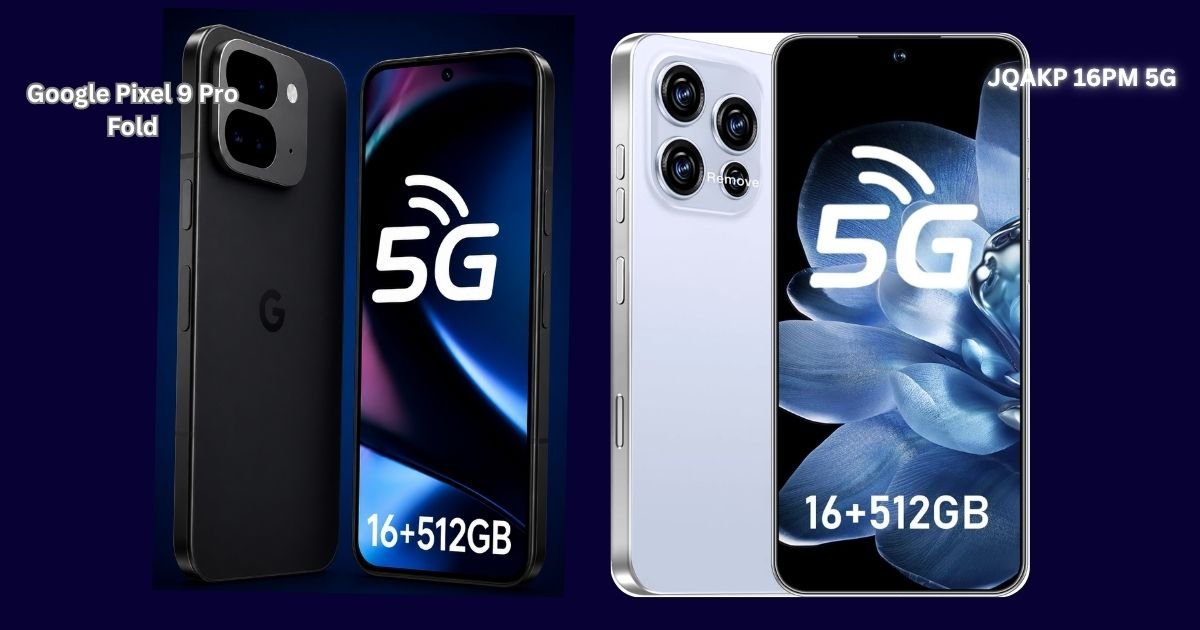
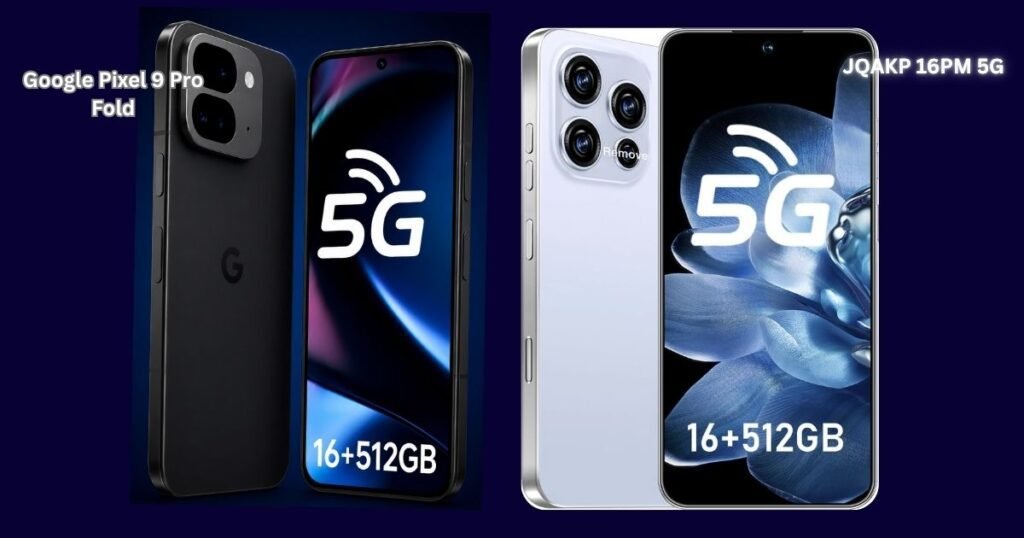
If you are a startup founder, NGO director, or a remote operations specialist managing teams across the USA, UK, Canada, or Europe, you are fighting a brutal, unwinnable battle against the clock. When evaluating the JQAKP 16PM 5G vs Google Pixel 9, you are not just comparing hardware specs; you are deciding whether to protect your billable hours or burn them.
You do not have the luxury of spending twelve hours reading tech threads about processor benchmarks, thermal throttling limits, or camera sensor apertures. You are suffering from acute time poverty. You need answers, you need tools that simply work the moment you touch them, and you need every piece of technology you buy to be framed entirely around business return on investment.
Here is the exact pain point you are likely feeling right now, even if you have not put a name to it: You are bleeding billable hours to “tech friction.”
Tech friction is that two-second micro-lag when you switch between your communication channels and your active project management tools. It is the dropped frames on a critical video pitch when you are trying to close a client from an airport lounge. It is the maddening, blood-pressure-spiking inability to quickly edit and sign a PDF contract while in transit because your device suddenly freezes.
Even worse? You might currently be carrying a device that serves as an active security liability to your client’s confidential data, completely negating the thousands of dollars your company spends on backend server security. You wouldn’t invest the capital to build a 24/7 solar-powered command centre with fibre-optic network redundancy, only to run your secure executive communications through a heavily compromised, unpatched budget phone. So why do so many executives run their global operations on vulnerable mobile hardware?
Why must you read this article to the very end?
In this comprehensive, zero-fluff breakdown, we are going to dissect two wildly different approaches to mobile tech fighting for a spot in your briefcase: the hyper-budget, spec-heavy JQAKP 16PM 5G, and the AI-driven corporate standard, the Google Pixel 9.
Table of Contents
I have embedded two critical pieces of information deep in this guide that you simply cannot afford to miss. First, I am going to expose a hidden, silent security blind spot in off-brand hardware that is quietly costing founders their proprietary data—and in some cases, their initial funding rounds. Second, at the end of this guide, I will break down the exact “Time Recovery ROI Formula.” This is the mathematical framework top digital entrepreneurs use to turn a premium smartphone purchase from a depreciating liability into a measurable, revenue-generating asset.
Do not skip ahead. Your next major business breakthrough—and the protection of your intellectual property—might just depend on the screen you are holding right now.
PSetting the Baseline for the JQAKP 4 PM 5G vs Google Pixel 9 Debate
Let us establish reality before we dive into the specs. For a modern digital operator, a smartphone is no longer just a communication device used to check emails and make phone calls. It is a portable command center.
When you are coordinating a global supply chain from a coffee shop in London, finalizing a crucial Series A funding round while waiting for a connecting flight in Toronto, or managing an emergency NGO logistics route in a developing nation, your phone is the only thing standing between you and total operational collapse.
In the high-stakes markets of English-speaking economic hubs, speed and precision dictate who wins the contract and who gets left behind. Every single second your phone takes to render a complex financial PDF, every time your battery dies during a high-stakes client negotiation, and every moment you spend manually typing out meeting notes that could have been instantly transcribed by AI, you are literally losing money.
Right now, the consumer electronics market offers two distinct philosophies to solve this executive problem.
- Philosophy 1: The Brute-Force Budget Illusion. Brands you have never heard of are flooding e-commerce platforms with phones boasting astronomical specifications for pennies on the dollar. They promise desktop-level RAM and batteries the size of a car jump-starter. They prey on consumers and busy professionals who buy based solely on raw numbers, assuming bigger is always better.
- Philosophy 2: Software-First Artificial Intelligence. Premium tech giants are shifting away from the exhausting “megapixel wars.” Instead, they are focusing entirely on creating smart, intuitive companions that actively automate your daily workload, secure your data at a hardware level, and integrate seamlessly with enterprise software.
To determine the absolute best investment for your business, we must put the poster child of the budget-brute-force movement head-to-head against the reigning champion of corporate AI efficiency.
The Spec-Sheet Illusion – Analyzing the JQAKP 16PM 5G
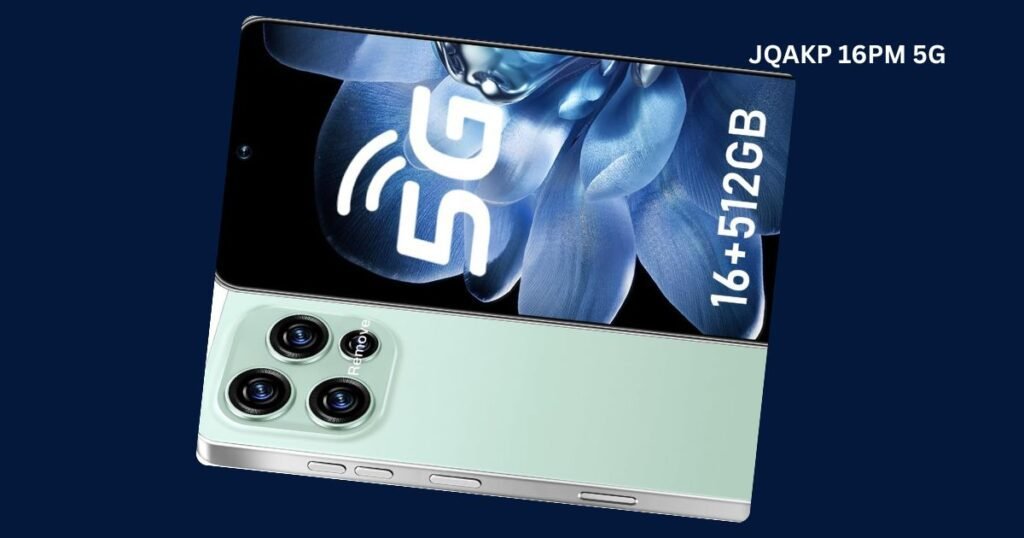
If you search for unlocked smartphones online right now, you will inevitably stumble across devices like the JQAKP 16PM 5G. At first glance, the product listing looks like a typographical error. For highly discounted prices, these devices offer specifications that seemingly rival premium laptop computers.
The On-Paper Promises
To understand why founders fall for this trap, you have to look at the incredibly persuasive marketing claims:
- 16GB of RAM & 512GB of Storage: In theory, this implies you can leave fifty tabs open, download your entire company directory offline, and never see a stutter when switching apps.
- 7000 mAh Battery: The average premium flagship phone sits around 4500 to 5000 mAh. A massive 7000 mAh battery suggests you could go off-grid for three days and still have juice left for a marathon video call.
- 6.99-inch HD Display: A massive, nearly 7-inch screen essentially turns the phone into a mini-tablet. This sounds perfect for reviewing financial spreadsheets, project management boards, or digital marketing ad creatives.
- 68MP + 108MP Camera System: Numbers that suggest high-end photography capabilities right out of the box.
The Real-World Executive Experience (The Autopsy)
As operations strategists, we see brilliant professionals fall for this exact trap time and time again. They buy the ultra-budget spec monster thinking they just outsmarted the tech industry, saving $800 that they can allocate elsewhere in their business.
Here is what actually happens when you try to run a serious, revenue-generating business on a device like the JQAKP 16PM 5G.
The Processing Bottleneck (Why RAM is a Lie) RAM is completely useless if the underlying architecture and processor cannot support it. While these phones claim 16GB of memory, the integration between the cheap hardware and the unoptimized Android operating system is often remarkably poor. The processor—the actual brain of the phone—is usually a white-label, outdated chip from five years ago.
Checking real-time conversion data on a custom-built Sales Analytics Dashboard requires fluid rendering and immediate visual feedback. If you try to open that heavy web app on a budget processor, the Javascript freezes. The chip cannot handle the data visualization, completely bottlenecking your workflow. It doesn’t matter how much RAM you have if the engine can’t turn the wheels. You will experience frozen screens right when your investors are asking the most critical questions.
The Camera Reality Check A 108MP camera sensor on a budget phone is achieved through heavy software interpolation, not high-quality optical glass. Interpolation means the software is just guessing what the pixels should look like and digitally stretching the image. If you are a digital marketer trying to shoot crisp content for a brand, or an executive who needs to look sharp and professional on a mobile Zoom call with overseas partners, this device will render you as a grainy, washed-out blur. In business, perception is reality; if your video feed looks cheap, your brand looks cheap.
The Verdict on the Budget Brute Is the JQAKP 16PM 5G entirely useless? No. If you run a logistics warehouse and need a cheap, disposable, massive-battery device purely for scanning barcodes on a localized intranet, it serves a specific purpose. But as the primary command center for a high-value professional? It is a massive liability. It will cost you far more in lost time, dropped client calls, and sheer daily frustration than you ever saved on the purchase price.
The Silicon Valley Powerhouse – Analyzing the Google Pixel 9
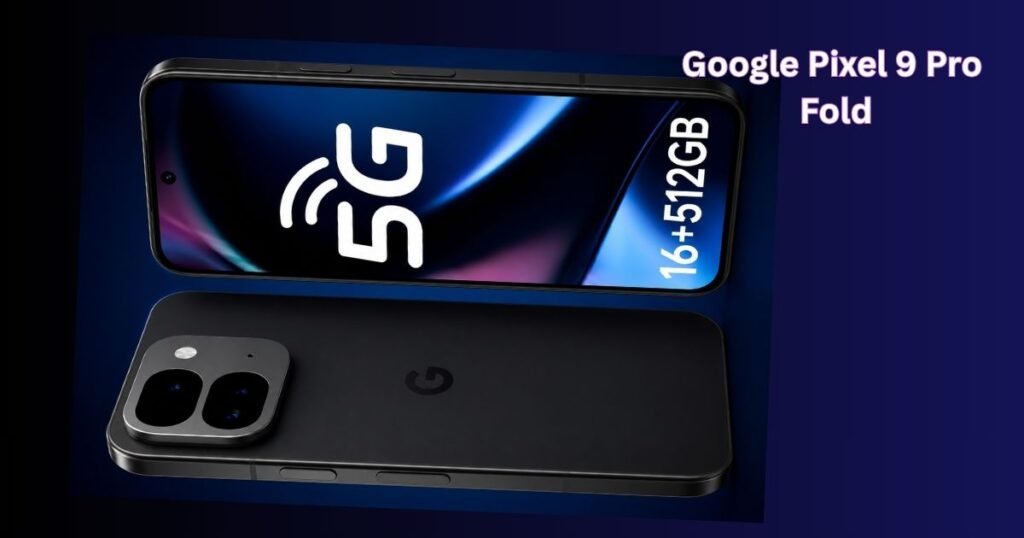
Now, we turn our attention to a device engineered from the ground up specifically to solve the modern professional’s workflow constraints. The Google Pixel 9 is not just a telephone; it is a pocket-sized executive assistant powered by some of the most advanced machine learning available to the public.
Unlike the inflated, misleading spec sheets of budget brands, Google focuses entirely on holistic performance. Let’s break down why this device is rapidly becoming the standard issue for remote CEOs, Operations Support Specialists, Project Coordinators, and high-tier digital nomads.
The AI Advantage: Buying Back Your Time
The most compelling reason to invest in the Pixel 9 over any budget device is the native, deeply integrated presence of Gemini, Google’s flagship AI assistant. For a busy professional, time is the ultimate currency. If a phone cannot buy you back time, it is useless.
Imagine you just stepped off a transatlantic flight into Heathrow Airport. You have 40 unread emails from your development team, a client demanding a project update, and your main communication channel is on fire. Instead of standing in the terminal furiously scrolling and typing with your thumbs, you simply hold the power button to summon Gemini AI.
You ask the AI to summarize the thread, and within three seconds, you have a bulleted list of the core issues. You dictate a response, which Gemini automatically formats into a polite, professional corporate tone. What would have taken 25 minutes of stressful typing takes 45 seconds.
The Magic of “Circle to Search
Furthermore, the Pixel 9 introduces a feature that fundamentally changes mobile research: “Circle to Search.” If you are reviewing a competitor’s app interface, reading a PDF report, or looking at a complex financial graph, you simply draw a circle around any text or image on the screen with your finger.
Google instantly pulls up all relevant market data, translates the text, or finds the source without you ever leaving the app you are in. This completely eliminates the constant context-switching and app-juggling that destroys an executive’s deep focus.
Communication, Content, and Brand Perception
Remote work relies heavily on visual communication. The Pixel 9 features an advanced 50MP main camera and a new 48MP ultrawide camera, backed by Google’s industry-leading computational photography algorithms.
If you are a founder recording a quick update for your LinkedIn audience, or a consultant jumping onto a high-stakes video call, the Pixel 9 ensures you look impeccably lit and sharply in focus. The proprietary Tensor G4 chip adjusts exposure and skin tones in real-time. This means even if you are sitting in a poorly lit hotel room in Toronto, your video feed looks broadcast-ready and authoritative.
Battery and Multitasking Efficiency
Equipped with 12GB of RAM, the Pixel 9 handles heavy corporate multitasking flawlessly. Managing automated workflows through Zapier, tracking dozens of moving pieces in Trello or Asana, and keeping client documents synced requires a device that doesn’t buckle under pressure. You can run all of these intensive platforms simultaneously without the device breaking a sweat.
While it features a 4,700 mAh battery (smaller in raw physical size than the 7000 mAh claimed by budget brands), its power management is vastly superior because it is driven entirely by AI. The Pixel actively learns which apps you use for business and which you don’t, heavily throttling background battery drain for unused apps. This ensures your phone easily survives a 16-hour workday of heavy corporate use. When you do need a top-up, it can fast-charge to 55% in roughly 30 minutes.
JQAKP 16PM 5G vs Google Pixel 9 Head-to-Head Business Scenarios
To truly understand why your hardware choice matters, let’s put these two devices into three real-world simulations that business owners face regularly.
Scenario 1: The Airport Transit Emergency
You are at JFK airport, and your lead developer messages you that the primary e-commerce site has crashed just as a major ad campaign goes live. You have exactly 15 minutes before boarding your flight.
- Using the Budget Phone: You try to open your server console via the web browser. The cheap processor struggles to load the complex Javascript dashboard. You try to jump to your team chat to authorize an emergency rollback, but the phone freezes because the RAM management is poorly optimized. You are forced to reboot the phone. You miss the window, the flight takes off, and your business bleeds $10,000 in lost sales while you are over the Atlantic ocean.
- Using the Google Pixel 9: You instantly pull up the dashboard. The Tensor G4 chip renders the heavy web app in milliseconds. You use split-screen mode to keep your chat open on the bottom half of the screen while reviewing the server logs on the top. You approve the rollback, use Circle to Search to instantly pull up the patch documentation, and board your flight with the crisis entirely averted.
Scenario 2: The Language Barrier in International Markets
You are an NGO director meeting with local community leaders in a rural European town where English is rarely spoken. You need to negotiate a critical land-use agreement.
- Using the Budget Phone: You are forced to rely on a clunky, ad-filled third-party translation app that requires a constant, high-speed 5G internet connection to work properly. The connection drops in the rural area, and the negotiation stalls awkwardly, damaging rapport and trust.
- Using the Google Pixel 9: Google’s AI processes live translation natively on the device. It can translate spoken conversations in real-time, acting as a seamless digital interpreter without needing a cell tower. You place the phone on the table, allowing you to build trust, close the agreement, and expand your NGO’s footprint without missing a beat.
Scenario 3: The Board Room Pitch
You are pitching a major retail partnership and need to cast a 50-slide data deck from your phone to the boardroom monitor.
- Using the Budget Phone: You attempt to cast, but the device lacks proper enterprise Miracast optimization. When it finally connects, the lag between your phone and the screen is a full two seconds, making you look disorganized, slow, and amateurish.
- Using the Google Pixel 9: The device integrates perfectly with enterprise casting protocols. You seamlessly swipe through slides with zero latency, utilizing the phone’s stunning OLED display to read your private speaker notes while the board sees only the flawless presentation. You look like a commanding, fully prepared industry leader.
The Open Loop Revealed – The Hidden Security Nightmare
At the beginning of this article, I promised to reveal a hidden vulnerability that is quietly costing founders their businesses. Here it is.
For CEOs, Operations Managers, and NGO directors handling sensitive donor databases, proprietary software code, or financial records, digital security is non-negotiable.
The Budget Phone Vulnerability: White-label and hyper-budget phones rarely, if ever, receive consistent Android security patches. You are operating on a permanently vulnerable operating system. One malicious phishing text, a compromised public Wi-Fi network at a European airport, or a zero-day exploit, and your entire corporate infrastructure could be breached. You are effectively handing the keys to your enterprise data over to international hackers just to save a few hundred dollars on hardware.
The Pixel 9 Fortress: The Google Pixel 9 is fortified by the custom-built Google Tensor G4 processor, designed specifically to handle complex AI tasks securely on the device. But more importantly, the Pixel ecosystem utilizes an advanced security architecture, including the Titan M2 security chip, which locks down sensitive data at the hardware level.
This ensures that even if you lose your phone in the back of a London cab, your local files, saved passwords, and biometric data remain cryptographically sealed. Additionally, Google guarantees 7 years of OS and security updates. You are not buying a phone that will be obsolete and vulnerable in 12 months; you are investing in a secure terminal that will scale securely alongside your business for years to come.
The Time Recovery ROI Formula (How to Make Money with Tech)
As promised, we need to talk about the exact mathematical formula top executives use to justify premium tech purchases.
You must stop viewing a smartphone as a consumer expense. You need to start viewing it as a Time Recovery Asset.
Let us assume your time as a CEO, consultant, Executive Assistant, or founder is worth a highly conservative $150 per hour.
If the Google Pixel 9’s AI email summarization, lightning-fast processing speeds, instantaneous voice-to-text dictation, and superior multitasking save you just 20 minutes a day, that equals roughly 1.6 hours a week.
- 1.6 hours x 50 working weeks = 80 hours saved per year.
- 80 hours x $150/hour = $12,000 in recovered time value annually.
By trying to “save” a few hundred dollars buying a white-label device, you are actively burning thousands of dollars in lost productivity, dropped connections, and compromised efficiency. Premium hardware like the Pixel pays for itself within the first thirty days of use simply by removing the operational friction from your daily workflow.
Comprehensive FAQ for Remote Professionals
To ensure you have every single piece of data needed to make this executive decision, we have compiled the most common questions our professional readers ask regarding mobile setups for online business.
- Is the Google Pixel 9 secure enough for enterprise-level NGO and financial work? Absolutely. Google devices are frequently deployed in massive enterprise environments specifically because of their hardware-level encryption (via the Titan M2 chip) and guaranteed, rapid deployment of Android security patches. Cheap budget phones simply do not offer this critical corporate-grade protection. Zero-trust networks demand compliant hardware, and the Pixel delivers.
- Does the massive 7000 mAh battery on budget phones make them better for international travel? Not necessarily. While a larger battery holds more raw power, unoptimized budget processors drain that power incredibly inefficiently. The Pixel 9 features a 4,700 mAh battery, but its AI-driven battery management learns your usage patterns and restricts background data for apps you don’t use. This easily gets you through long travel days without the added bulk and weight of a massive, cheap battery cell. Furthermore, the Pixel 9 charges to 55% in roughly 30 minutes.
- Can the Pixel 9 replace my laptop for remote operations support? For about 80% of daily tasks—yes. With 12GB of RAM, seamless Google Workspace integration, and the ability to cast to larger screens, a vast majority of communication, document review, and team management can be done exclusively on the Pixel. If you are coordinating projects on the move, this allows you to leave the laptop in your bag during transit while still responding to client emergencies.
- Will the Pixel 9 work on any carrier if I travel to Europe, the UK, or Canada? Yes. When you purchase an unlocked Google Pixel 9, it is designed for global flexibility. It supports a massive array of global 5G bands, meaning you can easily drop in a local SIM card in London, Berlin, or Toronto and immediately have high-speed business connectivity. This is vital for executives who bounce between international economic hubs.
- What is the “Circle to Search” feature, and how does it help marketers and project managers? Circle to Search is a revolutionary AI tool natively built into the Pixel. If you are scrolling through a social media feed and see a competitor’s product, a specific font, or a piece of data on a graph, you simply draw a circle around it with your finger. Google instantly analyzes the image and brings up search results, pricing, or source data without you having to type a single word. It is a massive time-saver for market research and competitive analysis.
- What are the color options and build quality of the Pixel 9? The Pixel 9 is designed for the modern boardroom, featuring a damage-resistant Corning Gorilla Glass Victus 2 display and an IP68 rating for water and dust resistance. It is built to survive the rigors of heavy travel. It is available in highly professional, sleek colors including Obsidian, Porcelain, Wintergreen, and Peony.
- How does the Pixel 9 handle video conferencing in poor lighting? This is where Google’s computational photography excels. The Tensor G4 chip uses advanced algorithms to automatically adjust exposure, reduce visual noise, and prioritize your face, even if you are taking a Zoom call in a dimly lit airport lounge or the back of a taxi. Your clients will see a crisp, professional feed, reinforcing your authority.
The Final Verdict in the JQAKP 16PM 5G vs Google Pixel 9 Matchup
We set out to answer one critical question: When looking at the JQAKP 16 PM 5G vs Google Pixel 9, which of these phones is the best for remote work, business operations, and executive management?
If you want to drive sales, scale your operations, secure your enterprise data, and operate with the efficiency of a Silicon Valley veteran, the decision is not even close.
The Google Pixel 9 is our undisputed winner and the absolute best recommendation for any serious professional.
It is an investment in your own operational capacity. The Gemini AI integration, the unshakeable enterprise security, the stunning OLED Actua display, and the sheer processing power of the Tensor G4 chip make it an indispensable tool for leaders who cannot afford to waste a single minute.
The budget devices flooding the market are fascinating pieces of cheap engineering, but they are a false economy. They will ultimately cost you far more in frustration, lost clients, and potential security breaches.
Take Action Now: Reclaim Your Time and Secure Your Business
Stop letting bad technology steal your time and throttle your revenue potential. If you are serious about making money, streamlining your remote workflows, and maintaining a competitive edge in your industry, you must upgrade your command center today.
Do not wait until a dropped call loses you a client or a security flaw compromises your data.
👉 Click Here to Secure the Google Pixel 9 at the Best Current Market Price
Secure your data, automate your busywork, and start buying back your billable hours today!