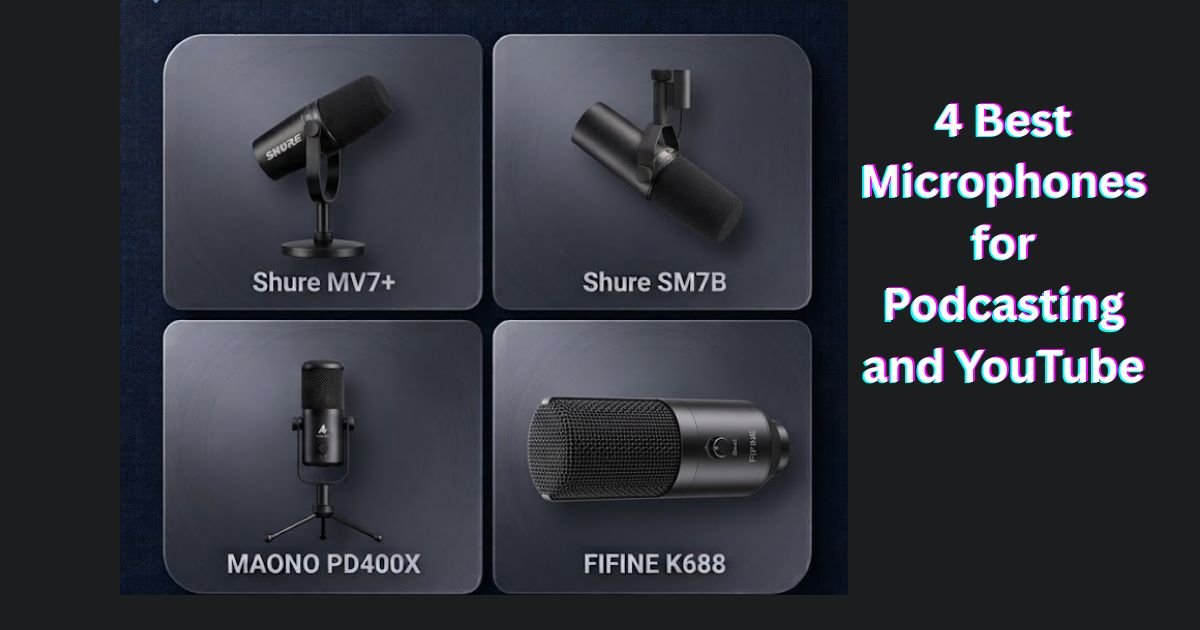
The $10,000 Audio Secret: The 4 Best Microphones for Podcasting and YouTube (2026 Buyer’s Guide)
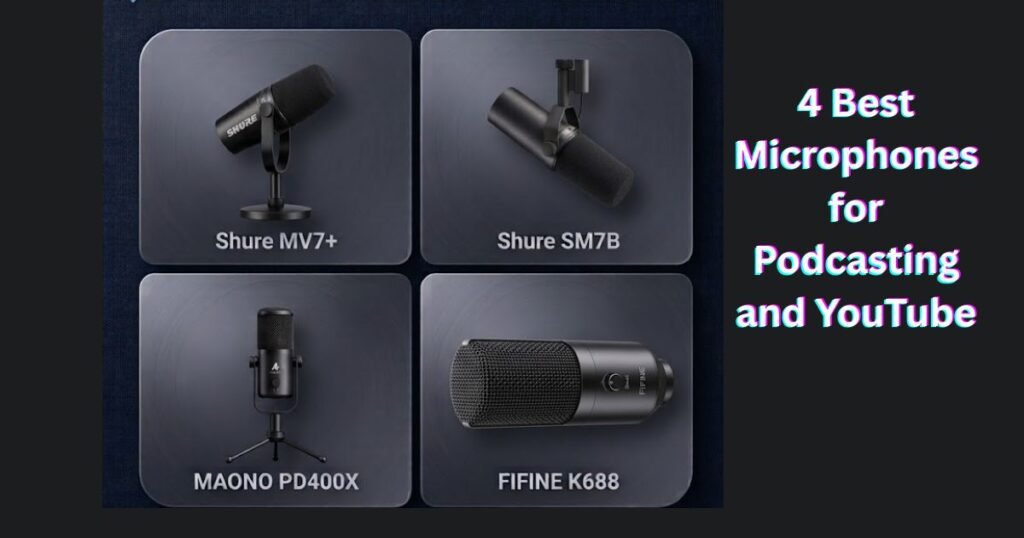
Stop obsessing over your 4K camera lens for exactly three minutes.
If you are a digital marketer launching a high-ticket webinar, a remote CEO pitching investors across the Atlantic, or a YouTube creator trying to hack the retention algorithm, you are likely bleeding viewers and client trust due to a completely invisible culprit.
It isn’t your lighting. It isn’t your background. It isn’t even your internet connection.
It is the subtle, subconscious, trust-destroying irritation of bad audio.
Think about your own behavior. You will happily watch a slightly grainy video if the information is good. You will forgive a messy home office background. But you will absolutely, categorically refuse to listen to a voice that sounds like it is broadcasting from the bottom of an empty tin can, or echoing inside a public restroom.
When you jump on a crucial Zoom call to demonstrate a custom software dashboard, or when you hit “record” on your next big YouTube tech review, your voice is your primary instrument of persuasion. If your audio crackles, picks up the hum of your air conditioner, or captures the sound of a dog barking three rooms away, you introduce immediate “tech friction.” You instantly sound amateur, unprepared, and frankly, cheap.
But fixing this doesn’t mean you need to drop $5,000 on a soundproof recording studio. In fact, there is a massive mistake that 90% of beginners make when buying audio gear—a mistake that actually makes them sound worse after spending hundreds of dollars.
I am going to reveal exactly what that beginner trap is in just a moment. I will also reveal a $50 hidden gem that completely outperforms $200 setups.
To maintain our “Honest Over Hype” standard here at TechCompassReview, we are bypassing the endless, overwhelming catalog of confusing audio equipment. We have isolated the top four microphones currently dominating the market for creators, founders, and digital operations specialists.
We are breaking down exactly which one belongs on your desk based on pure business ROI, psychological impact, and creative leverage. Do not skip ahead. The absolute cheapest mic on this list might actually solve your specific problem better than the $400 industry standard. Let’s dive in.
When searching for the best microphones for podcasting and YouTube, you must prioritize background noise rejection over raw studio specs.
Table of Contents
The Psychology of Audio (And Your Beginner Audio Guide)
Before we dissect the hardware, you need to understand the psychological battlefield of digital communication.
In marketing, psychology, and executive leadership, there is a powerful cognitive bias known as the “Halo Effect.” When people perceive one positive trait about you, they automatically assume other positive traits. If your audio is rich, deep, and radio-quality, the listener’s brain subconsciously translates that audio fidelity into competence and authority.
Think about your favorite podcast. The host’s voice feels like they are sitting right next to you. It is intimate. It commands attention. When you have that level of acoustic fidelity, people trust what you say before they even process the words.
Conversely, if you are using the built-in microphone on your laptop, the listener’s brain has to work overtime to filter out the static and room echo. This causes “cognitive load.” Within three minutes, your client or your YouTube viewer is fatigued. They stop listening to your pitch. They click off your video. You lose the sale, the subscriber, and the momentum.
Investing in one of the best microphones for podcasting and YouTube is not a vanity purchase. It is a Time Recovery Asset. It is a conversion multiplier.
The Beginner’s Trap: Dynamic vs. Condenser Microphones
Here is the open loop I promised to close. When most people decide to upgrade their audio, they Google “studio microphone.” They usually end up buying a cheap Condenser microphone (like the popular Audio-Technica AT2020 or a Blue Yeti).
This is a massive mistake for 90% of remote professionals.
Let’s keep this beginner audio guide incredibly simple. Imagine you are in a dark room. A Condenser microphone is like a camping lantern. When you turn it on, it lights up the entire room. It hears everything! It hears the dog barking outside, the air conditioner humming, and the computer fan spinning. Condensers are designed for perfectly soundproofed, million-dollar music studios.
A Dynamic microphone is like a laser-focused flashlight. It only lights up exactly what you point it at. If you point it at your mouth, it only hears your mouth. It actively rejects the dog and the air conditioner.
If you are recording in an untreated bedroom, a home office with hardwood floors, or a busy corporate suite, a dynamic microphone is your only path to professional, clean audio. Every single microphone we are about to review is a dynamic microphone, purposefully selected to make you sound like a titan of industry, regardless of what noisy room you are sitting in.
The Executive’s Automated Weapon – Shure MV7+
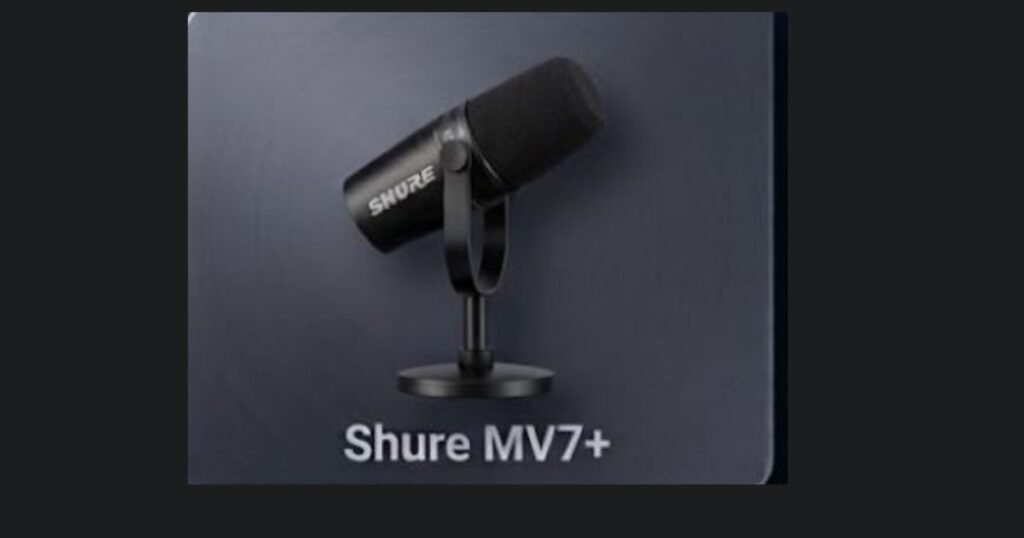
If you are a remote operations manager, a high-level digital marketer, or a founder who needs absolute premium audio without needing a degree in sound engineering, the Shure MV7+ is your ultimate weapon. This is widely considered the absolute best microphone for digital marketing and high-stakes corporate communication.
Breaking Down the Shure MV7+ Features
The MV7+ is an absolute technological masterpiece for the busy professional. Why? Because it completely eliminates the learning curve while delivering the legendary Shure broadcast sound.
- Hybrid Connectivity (USB-C & XLR): Most high-end microphones require a complex “audio interface” (a separate expensive box you plug the mic into before connecting it to your computer). The MV7+ features a hybrid design. You can plug it directly into your Macbook or PC via a simple USB-C cable today. If you build a massive studio in three years, you don’t have to throw the mic away—you just switch to the professional XLR port. It grows with your business.
- The Invisible Audio Engineer (Auto-Level Mode): This is the game-changer. Have you ever watched a webinar where the presenter leans back in their chair, and suddenly you can’t hear them? The MV7+ has a computer chip inside that acts as an invisible volume guard. If you back away from the mic, it automatically turns your volume up. If you lean forward and get excited during a pitch, it instantly turns your volume down so it doesn’t clip or distort. Your voice stays at the exact same perfect, buttery level the entire time.
- The Real-Time Denoiser: You could have a loud, clicky mechanical keyboard typing away directly beneath this microphone, and the person on the other end of the Zoom call will only hear your voice. The software actively deletes room hiss and ambient noise in real-time.
- Customizable LED Touch Panel: Instead of ugly plastic buttons that make a loud “click” sound, the MV7+ features a glowing glass screen on the top. If you need to sneeze or take a sip of water during a big business call, you just lightly tap the glowing glass, and it instantly mutes your voice in total silence. You can also slide your finger across the light bar to adjust your headphone volume.
- Digital Pop Filter (The Popper Stopper): When you say words with heavy “P” or “B” sounds, it shoots a puff of air at the mic that sounds like a tiny explosion. The MV7+ has a physical foam shield, but it also has a digital shield that magically deletes those harsh plosives before they ever reach the computer.
The Psychological Edge & Verdict: The MV7+ gives you that deep, authoritative, late-night “radio voice.” When you speak, the room goes quiet. It is sleek, professional, and visually stunning on camera. If you want flawless plug-and-play broadcast quality without the headache of balancing audio levels manually, this is your next purchase.
The Shure MV7+ consistently ranks among the best microphones for podcasting and YouTube thanks to its built-in software.
Part 3: The Undisputed Studio Legend – Shure SM7B
If you are building a dedicated studio for serious, long-form podcasting, professional voiceover work, or a high-end YouTube set, you cannot ignore the undisputed heavyweight champion of the audio world: the Shure SM7B dynamic microphone.
Look closely at any massive, global podcast—from Joe Rogan to top-tier business interviews. Nine times out of ten, they are speaking into the sleek, menacing profile of a Shure SM7B. It has been the industry standard for broadcasting for decades, and for good reason.
Breaking Down the Shure SM7B Features
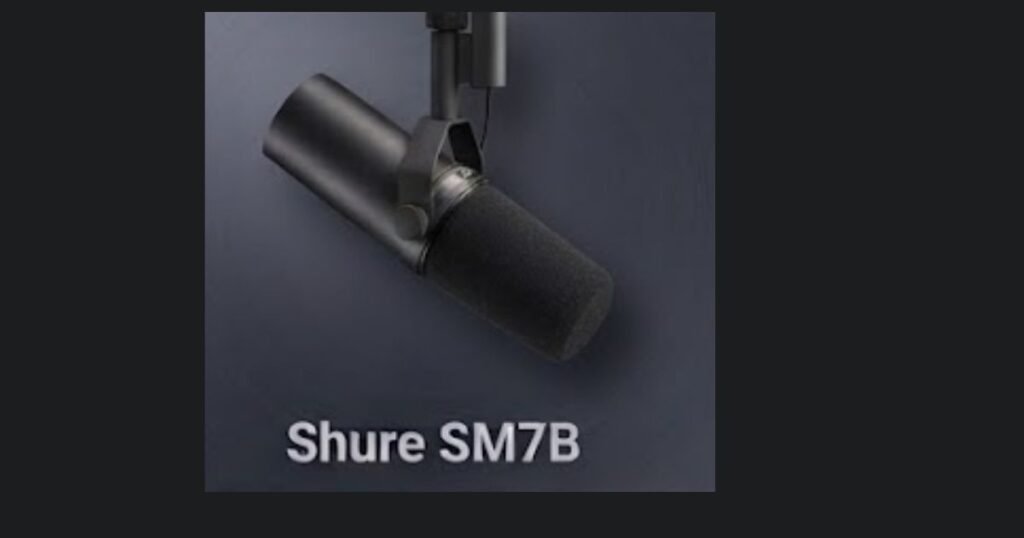
The SM7B does not have fancy touch screens, USB ports, or glowing LED lights. It is a pure, unadulterated, professional audio instrument designed to do one thing perfectly: capture the human voice with pristine warmth.
- Flat, Wide-Range Frequency Response: Some cheap microphones try to artificially make your voice sound deeper by boosting the bass, which ends up sounding fake and muddy. The SM7B is the clearest acoustic mirror on the market. It captures the exact “truth” of your voice, delivering a polished, rich response that smooths out harsh high notes while adding a layer of buttery authority to your lower registers.
- Internal Air Suspension Shock Isolation: If a microphone is sitting on a desk and you bump the table, the mic usually picks up a massive, booming earthquake sound. Most microphones require you to buy an ugly, external “shock mount” to fix this. Shure hid the shock mount inside the SM7B. The internal capsule is suspended on a cushion of air, virtually eliminating mechanical noise transmission. You can literally tap the metal stand holding the microphone, and the mic will barely hear it.
- Advanced Electromagnetic Shielding: Computer monitors, bright studio lights, and smartphones shoot out invisible waves of energy. Cheap microphones accidentally catch these waves, creating a nasty buzzing hum in your audio. The SM7B features a heavy metal shield that blocks all broadband interference. You get absolute, total silence in the background.
- Bass Roll-Off and Presence Boost Controls: On the back of the microphone, you will find two recessed switches. If you naturally have a super deep, booming voice that sounds muddy in small rooms, you flip the Bass Roll-Off switch, and the microphone automatically shaves off the super-low rumbles. It acts like a custom tailor, fitting the sound perfectly to your specific vocal cords.
The Catch (Honest Over Hype): The SM7B is notoriously demanding. It is XLR-only. You cannot plug this into a computer via USB. You must purchase a high-quality audio interface (like a Focusrite Scarlett) to connect it to your PC. Furthermore, it is “gain hungry.” It requires a massive amount of clean electrical power to capture your voice, meaning most users also have to buy an inline preamp (like a Cloudlifter) just to get the volume loud enough.
The Verdict: If you have the budget to buy the microphone, the audio interface, and the preamp, and you plan to record in a fixed desk setup, the SM7B provides a vocal quality that simply cannot be beaten by anything else on the consumer market. It is a legacy asset that will last your entire career.
The Creator’s Swiss Army Knife – MAONO PD400X
What if you want the hybrid flexibility of the Shure MV7+, but you are bootstrapping a new YouTube channel and cannot justify a $300 price tag just for a microphone?
This is where the market gets interesting. In any MAONO PD400X review, you will find that this device is currently disrupting the audio market by offering premium, professional features at a heavily contested price point. It is the ultimate Swiss Army Knife for digital creators.
Breaking Down the MAONO PD400X Features
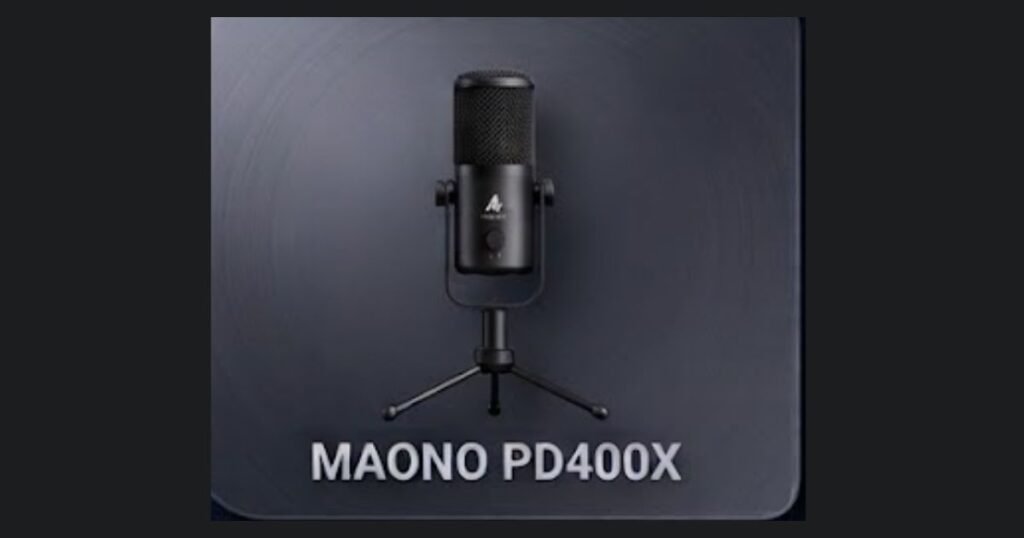
The PD400X brings the best of both worlds, providing a broadcaster’s aesthetic with high-tech software integrations that make live-streaming and content creation a breeze.
- Dual USB-C and XLR Connectivity: Like the MV7+, this is a hybrid. You can start your podcasting journey today by plugging it directly into your laptop via USB. It has incredible onboard audio conversion, meaning it sounds fantastic right out of the box without an expensive interface.
- The 3-in-1 Smart Knob: This is the absolute best feature for creators. On the front of the MAONO is a physical turning dial. But it isn’t just a volume knob. If you press it once, it controls your microphone gain (how loud you are). Press it again, and it controls your headphone volume. Press it a third time, and it controls your “monitor mix” (the balance between your voice and your computer’s game/music audio). If you are mid-stream on YouTube, you do not have to tab out of your software to fix your audio. You just tap the physical dial on your desk.
- Tap-to-Mute with LED Status Ring: Above the smart knob is a capacitive touch-mute button. Tap it, and the sleek LED ring instantly turns red to let you know you are muted. It is fast, silent, and highly reliable during live broadcasts.
- The Maono Link Software App: When you plug this mic in via USB, you get access to a free desktop app. The app lets you “color” your voice with EQ presets. Want to sound deeper? Click the low-cut/high-boost preset to remove room rumble and add crisp “air” to your vocals. It also features a built-in limiter and compressor to keep your audio professional and loud without distorting.
- Cardioid Dynamic Capsule: The listening area is shaped like a 3D heart (cardioid). It listens beautifully to the front, but is completely deaf to the back. If you have a noisy computer fan behind the mic, the PD400X simply ignores it.
The Verdict: The MAONO PD400X delivers a warm, natural broadcast tone that easily competes with microphones double its price. It beats the industry standard on transients (the crispness of high-end sounds like consonants). If you want physical hardware controls, a great software app, and a premium metal build without paying the “Shure Tax,” the PD400X is an absolutely brilliant investment.
The MAONO PD400X is a serious contender for the title of the best microphones for podcasting and YouTube on a mid-tier budget.
If you are building a remote studio, you need to invest in the best microphones for podcasting and YouTube to retain your audience’s attention.
Professional audio engineers agree that dynamic mics are the best microphones for podcasting and YouTube if you record in an untreated room.
The $50 Secret Cheat Code – FIFINE K688
Let’s get ruthlessly practical. I promised you an open-loop reveal of a massive budget secret.
Perhaps you are a startup founder who just spent your entire tech budget on a high-end Samsung G9 ultrawide monitor and a new desktop rig. You know you need a dynamic microphone to avoid sounding like an amateur on your client calls, but your wallet is completely tapped.
High-quality audio is no longer gatekept by massive bank accounts. The FIFINE K688 budget mic is a legitimate miracle of modern electronic engineering.
Breaking Down the FIFINE K688 Features
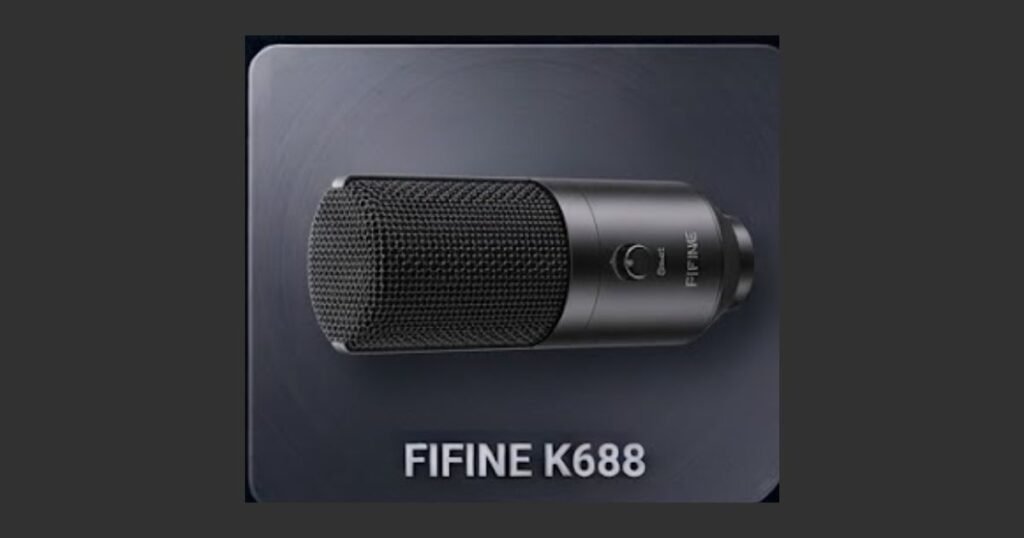
For roughly fifty dollars, you receive a dynamic XLR/USB microphone that routinely outperforms hardware three times its price. FIFINE has aggressively cornered the entry-level audio market, and the K688 is their undisputed crown jewel.
- Hybrid USB/XLR on a Budget: Yes, even at this insanely low price, you still get dual connectivity. You can use it as a plug-and-play USB mic today, and move it to a professional XLR mixer later.
- The Custom Built-in Shock Mount: Most cheap microphones just screw onto a hard piece of plastic, meaning every time you touch your desk, it sounds like an earthquake. FIFINE actually gives you a custom-built shock mount in the box. The microphone floats in the center of a plastic ring held by tight rubber bands. If you slam your hand on the desk to make an exciting point during your YouTube video, the rubber bands catch the vibration so your audio stays clean.
- The Panic Button (Tap-to-Mute): Right on the back of the FIFINE K688 is a touch-sensitive mute button. It features a subtle green light to let you know it is listening. If you need to cough or sneeze during a massive corporate conference call, you just tap the light. It turns red, and the mic instantly stops listening. No frantic clicking to find the mute button on your screen.
- High-Density Windscreen: Cheap microphones usually have very thin foam that doesn’t stop explosive “P” and “B” sounds. The K688 comes wearing a thick, high-density foam “sweater.” It wraps around the entire top of the microphone, smoothing out your voice and giving you a warm, broadcast-ready tone immediately.
The Verdict: While the physical build quality may utilize lighter plastics compared to the heavy metal chassis of a Shure, the actual audio output of the FIFINE K688 is staggeringly good. If you are currently using your laptop’s built-in microphone or a gaming headset, this $50 investment will increase your perceived professionalism by 1,000% overnight. It is the easiest, highest-ROI purchase you can possibly make for a remote workspace.
The Audio ROI Formula (How to Make Money with Tech)
We need to talk about why we are obsessing over the best microphones for podcasting and YouTube.
If you are a professional, you must stop viewing a microphone as a consumer electronic expense. You must view it as a direct driver of revenue. Let’s break down the psychology of a digital pitch.
Imagine you have managed to book a 30-minute consultation with a high-net-worth client. You are selling a $5,000 monthly operations retainer. You have the data, you have the strategy, and you have the confidence.
If your voice is piercing, tinny, and echoing off the walls, the client’s brain immediately associates your digital presence with “low quality.” They have to strain to hear you clearly over the static. That strain creates microscopic moments of frustration. By the time you reach your pitch, they are annoyed, distracted, and subconsciously looking for a reason to say no.
Now, imagine logging in with a Shure MV7+. Your voice booms through their speakers with the warmth and clarity of a late-night radio host. It is soothing. It projects calm, massive authority. Because the audio is flawless, they fall completely into the rhythm of your presentation.
Good audio removes the barrier between your brain and their wallet.
By trying to “save” money and relying on terrible laptop audio, you are actively burning thousands of dollars in lost trust and dropped conversions. A premium microphone pays for itself the very first time it helps you close a hesitant client or retains a viewer to the end of a monetized YouTube video.
Comprehensive FAQ for Audio Buyers
To ensure this pillar guide covers every single angle of your audio upgrade, we have compiled the most frequently asked questions from remote CEOs, creators, and founders.
Q: Do I really need a boom arm for these microphones? Highly recommended. If you place a microphone on a tiny desk stand, it is too far away from your mouth. Dynamic microphones require you to be close to the grille (about 2 to 4 inches away) to get that deep, rich broadcast sound. A boom arm elevates the microphone, brings it right to your lips, and further isolates it from desk vibrations. It also clears up precious desk space.
Q: What is the difference between USB and XLR connections again? USB is digital. You plug the microphone directly into your laptop, and the computer’s sound card does all the processing. It is simple, fast, and perfect for remote workers on the go. XLR is a professional analog audio cable. It requires you to plug the microphone into an audio interface, which then connects to your computer. XLR provides higher audio fidelity, zero latency, less electrical interference, and allows you to upgrade your gear in pieces. Hybrid mics (like the MV7+, MAONO, and FIFINE) give you the best of both worlds.
Q: I have a loud mechanical keyboard. Which microphone will hide the clicking noise best? You absolutely need a dynamic microphone. The Shure MV7+ is arguably the best on the market for this specific problem due to its tight cardioid pickup pattern and its advanced software-level denoiser. If you position the microphone close to your mouth and angle the back of it toward the keyboard, the clicking will virtually disappear from your recording.
Q: Can I use these microphones for singing and studio vocals? While dynamic microphones are excellent for broadcasting and podcasting, they are not the traditional choice for soaring, delicate, high-pitched studio vocals. Singers usually prefer Condenser microphones because they capture the absolute finest details of a vocal performance. However, legendary albums (like Michael Jackson’s Thriller) were famously recorded using a Shure SM7B dynamic microphone. If your room is untreated and noisy, a dynamic mic is still your safest bet for recording clean vocals.
The Final Verdict & Your Next Steps
We set out to answer one critical question: What are the absolute best microphones for podcasting and YouTube content creation?
We tested the top audio gear on the market to find the absolute best microphones for podcasting and YouTube available this year.
If you want to command a room, scale your digital operations, and project unshakeable authority, you must upgrade your audio. Period.
- The Executive Standard: If you want the ultimate, plug-and-play executive weapon with zero learning curve and software that mixes your voice for you, invest in the Shure MV7+.
- The Broadcast Legend: If you are building a legacy, permanent broadcast studio and refuse to compromise on analog vocal depth, secure the Shure SM7B.
- The Creator’s Tool: If you are a mid-tier creator who wants incredible software control, physical dials, and premium sound without the Shure price tag, grab the MAONO PD400X.
- The Budget Miracle: If you are bootstrapped but desperately need to stop sounding like an amateur on Zoom today, the FIFINE K688 is your budget savior.
Stop letting bad technology steal your credibility and throttle your revenue potential. If you are serious about making money, streamlining your remote workflows, and maintaining a competitive edge in your industry, you must fix your audio today.
Stop using your laptop audio and immediately switch to one of these best microphones for podcasting and YouTube
Do not wait until a poor pitch loses you a massive client, or a terrible voiceover kills your YouTube retention rate. Secure your audio asset right now
Lock in your audio, project massive confidence, and start commanding the respect your business deserves today.